
How it works…
FAQs
-
What even is a logic model?
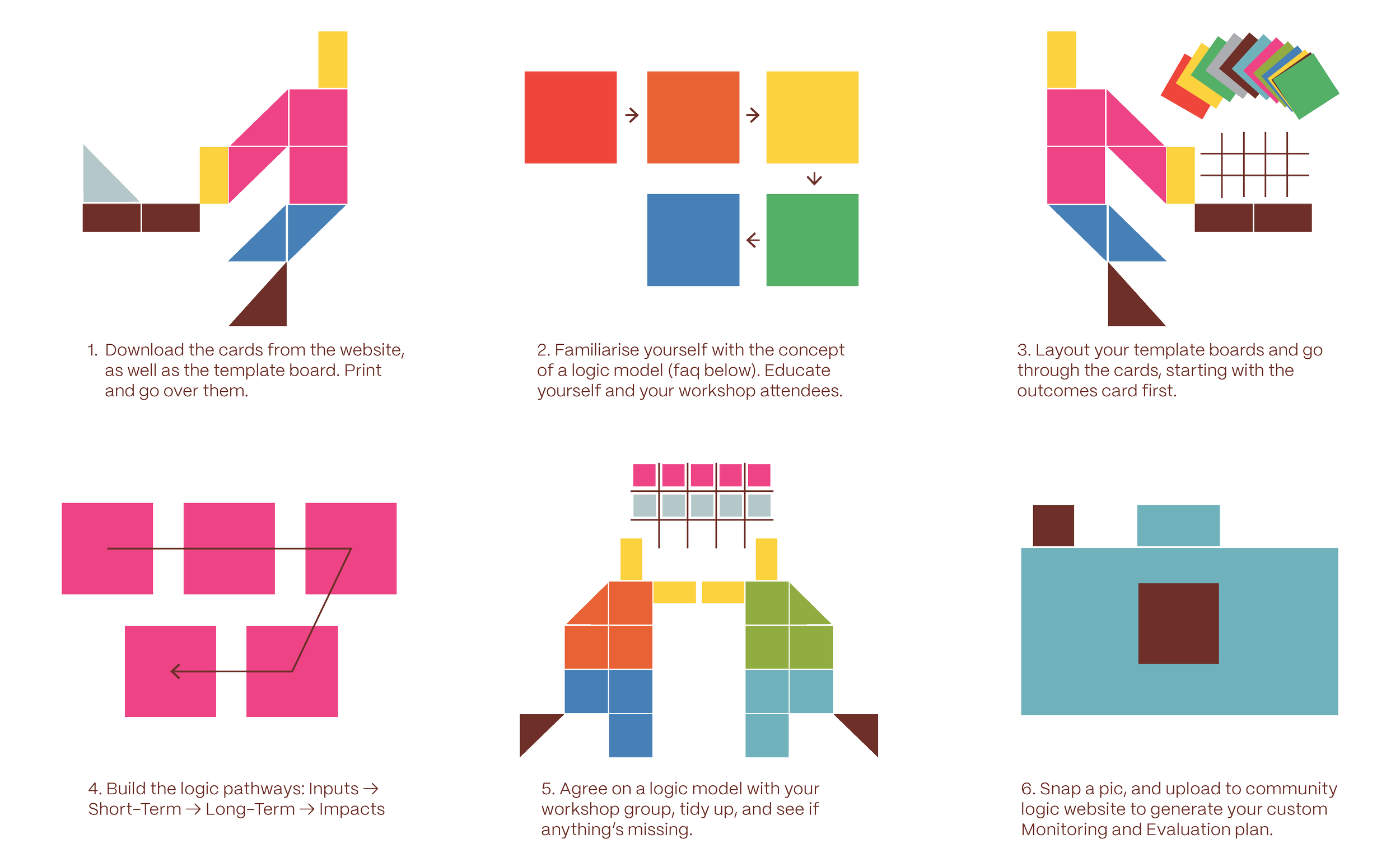
A logic model is a simple visual map that shows how a project is supposed to work. It links together what you put in (inputs), what you do (activities), what you expect to happen soon (short-term metrics), and what you hope to achieve over time (long-term impacts). It helps everyone involved share the same story of cause and effect: “If we do this, then this should happen, and eventually it will lead to this.”
In community projects, logic models make intentions clear, keep teams aligned, and help track whether changes are happening as expected. -
Why is monitoring and evaluation important?
Monitoring and evaluation (M&E) ensures that projects actually deliver the change they set out to create. By gathering information before, during, and after interventions, M&E helps communities and project teams understand what’s working, what isn’t, and what should be adapted.
It supports transparency, strengthens decision-making, and gives communities greater influence by showing how their contributions shape outcomes. -
How does Community Logic support community-led decision-making?
Community Logic makes the planning and evaluation process simple, visual, and collaborative. Instead of relying on technical reports or expert-only tools, it uses colour-coded cards and a shared board to help people co-design their logic model together. Each step from choosing outcomes to selecting metric is accessible and flexible, so communities can shape the project based on their lived experience. The QR system then turns the final board into a ready-made monitoring plan, ensuring that insights are captured and used throughout the project.